
Why We Walk You Through the Diagnostic Process
When your air conditioning stops keeping up in Westwood, the temptation is to just want it fixed and move on with your day. That is fair. But a diagnostic visit is not one single check, it is a sequence of smaller checks that each rule something out or point toward the actual cause. We walk through that sequence here so you know what a technician is doing during that time at your house, and why the order matters as much as the checks themselves.
The Call Before We Arrive
A diagnostic visit actually starts on the phone. When you describe what the system is doing, whether that is warm air blowing, a system that will not turn on, ice forming on a line, or an odd smell, we ask a handful of follow-up questions: how old is the equipment, when did the symptom start, has anything changed recently like a new filter or a thermostat swap. Those answers do not replace an in-person check, but they help the technician bring the right parts on the truck instead of making a second trip for a common capacitor or contactor issue that could have been anticipated from the symptom alone.
Starting With the Cheapest Possible Cause
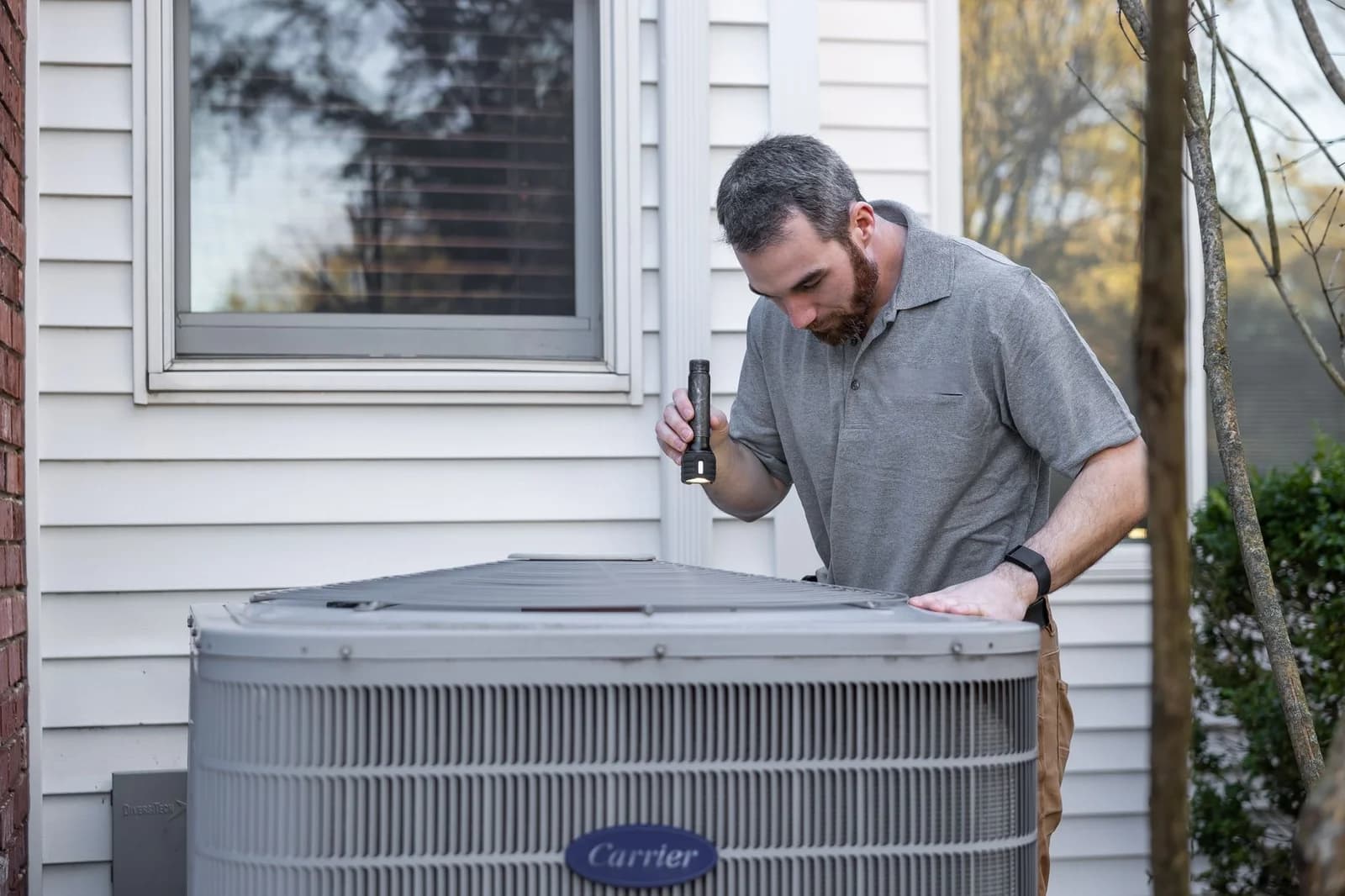
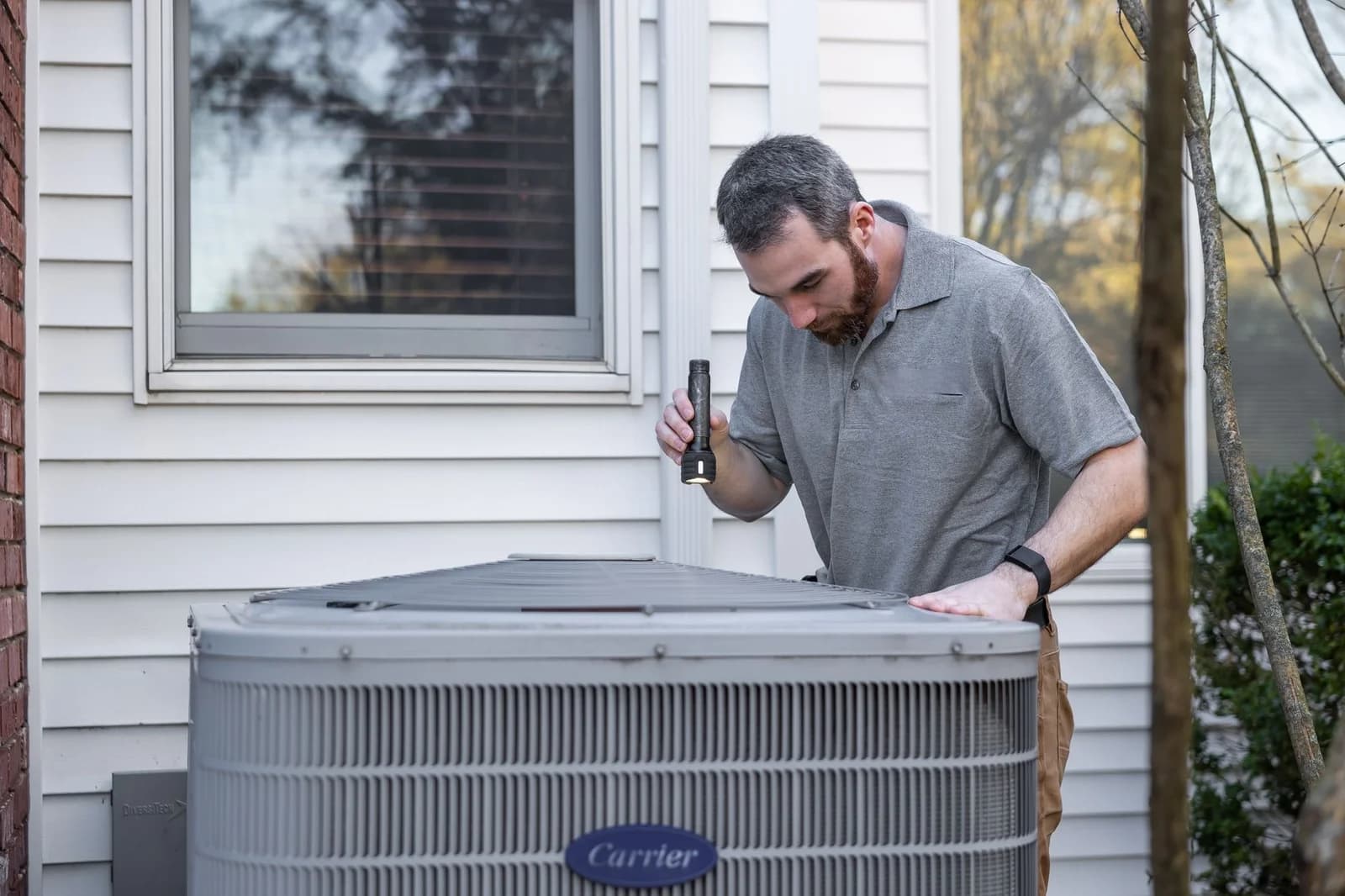
A good diagnostic visit checks the least expensive, most common causes first, not because they are usually the answer, but because ruling them out quickly saves you money if they are. That means a filter check, a thermostat battery and setting check, and a look at whether a breaker has tripped happen before anything gets opened up or gauges get connected. In Westwood and West LA, a surprising number of calls about a broken AC trace back to a filter so clogged that airflow dropped enough to trip a safety switch, not to a failed component at all.
Checking the Thermostat and Basic Controls
Next we confirm the thermostat is actually communicating with the equipment. Wiring that was touched during a DIY thermostat swap, a dead backup battery, or a setting left on the wrong mode can look exactly like equipment failure from where you are standing. This step takes only a few minutes but rules out an entire category of false alarms before we move to anything mechanical.
Electrical Component Testing
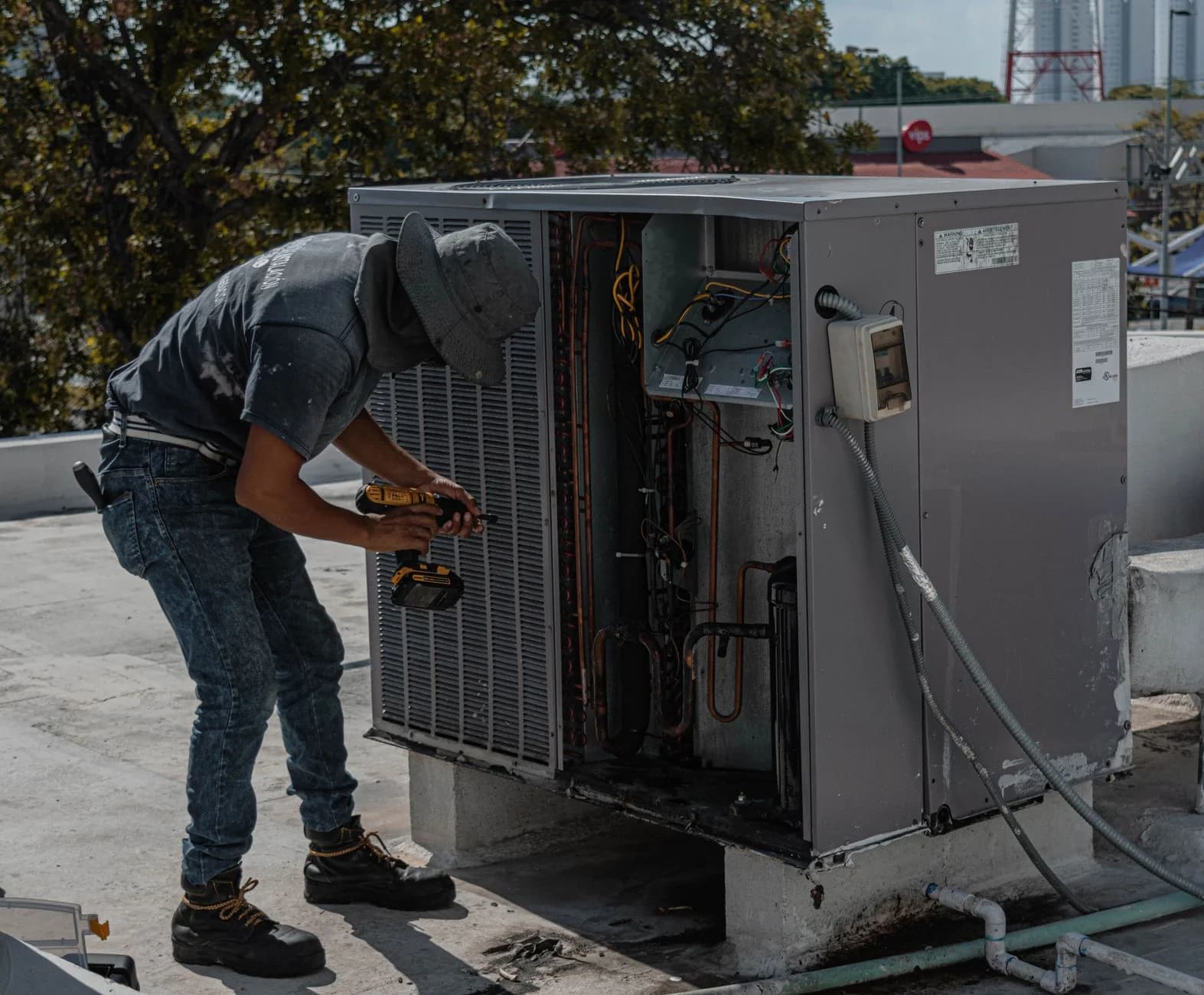
If the basics check out, we move to the electrical components that fail most often in this climate: the run and start capacitors, the contactor, and the connections inside the disconnect box. Dry heat and dust cycle these parts harder than a milder coastal climate would, and a capacitor reading below its rated microfarad value is one of the most common findings on a Westwood service call. We test these under load with a meter rather than judging from appearance, because a capacitor can look fine and still be failing.
Measuring Refrigerant Charge Instead of Guessing at It
If the system is running but not cooling well, refrigerant charge comes next. We connect gauges to the service ports and compare the readings against the manufacturer's target numbers for that specific piece of equipment and the outdoor temperature at the time of the visit. This is the step homeowners ask the most questions about, and for good reason: a system that is low on charge from a slow leak will keep running and keep costing you money without ever fully shutting down, which is why a gauge reading matters more than whether the unit sounds like it is working.
Airflow and Duct Checks in Older Homes
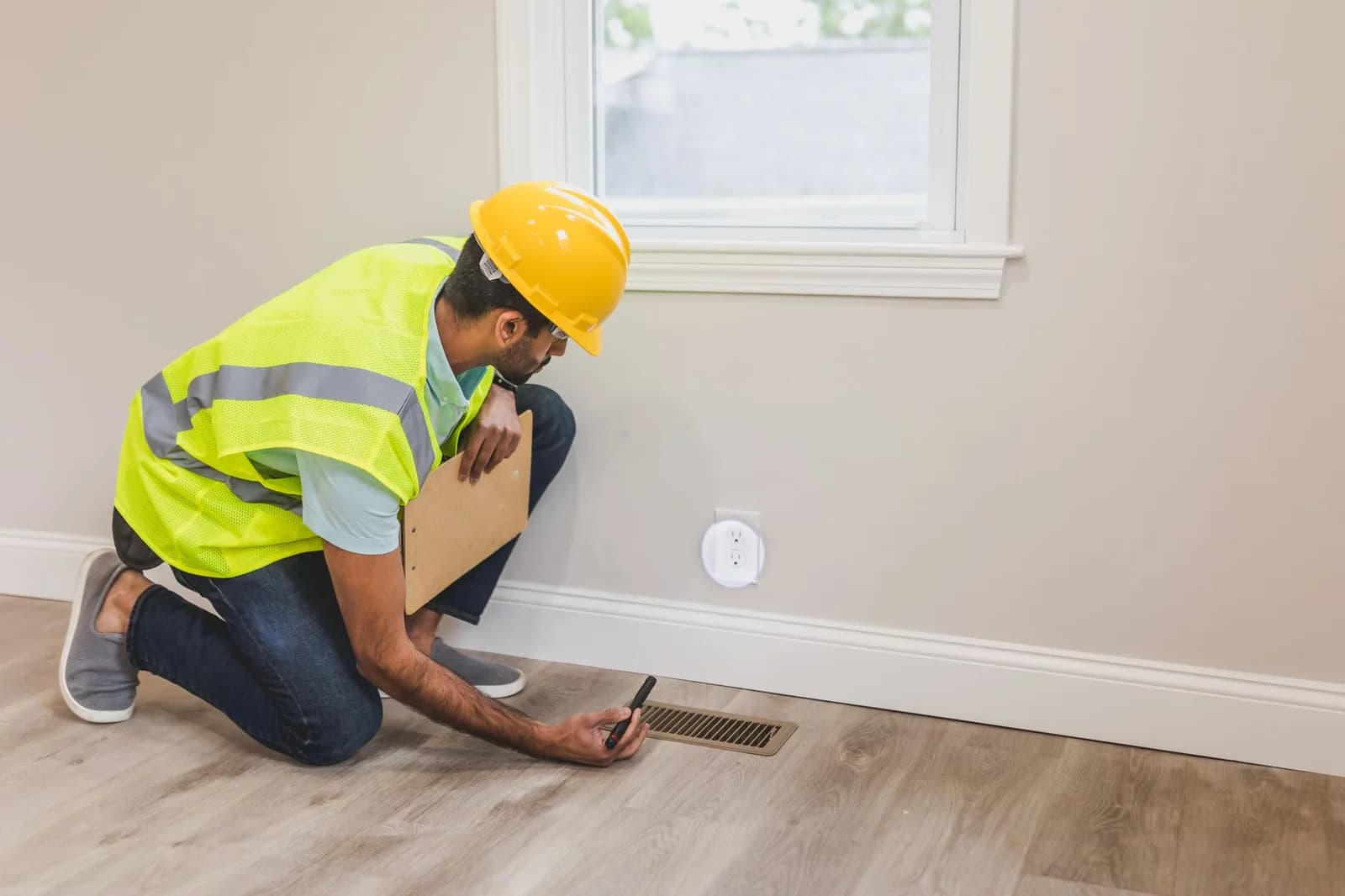
Westwood and Brentwood carry a lot of housing stock from the 1930s through the 1950s, built before central air was standard and retrofitted with ductwork later. When cooling complaints do not trace back to the equipment itself, we check static pressure and airflow at the supply and return, since undersized or leaky ducts in these older homes can starve an otherwise healthy system. This is a step that gets skipped in a rushed visit, and it is often where the real answer is hiding in a house built decades before the AC was ever added.
What Bel Air and Brentwood Hillside Properties Add to the Visit
Larger hillside properties in Bel Air and Brentwood often add steps to a standard diagnostic call. Multi-zone systems mean checking whether the complaint is isolated to one zone or affects the whole house, since a single stuck damper can look like a system failure from inside one bedroom. Long private driveways and gated access mean we plan arrival time with that in mind, and estate properties with equipment mounted farther from the house sometimes add extra time just walking the property to locate every component involved.
What Century City Condos Change About the Process
In Century City's condo towers, the diagnostic conversation often starts with a different question: is this a problem with your in-unit air handler, or with a building-wide system the HOA is responsible for. We check the in-unit components first, since that is what we can act on directly, and we document clearly when a finding points toward a shared system so you have something concrete to bring to building management rather than a vague complaint.
Why We Write Everything Down as We Go
Every reading we take gets written down at the time we take it: capacitor microfarad readings, refrigerant pressures, static pressure numbers, amperage draw on the compressor. We do this so the explanation you get at the end is not our memory of what we saw, it is the actual numbers set next to the manufacturer's target range. That written record is also what lets you get a second opinion with something real to hand over, rather than just our word for it.
The Estimate Before Any Repair Starts
Once the diagnostic steps point to a cause, we stop and write up what we found and what fixing it involves before touching anything further. You see the price before any repair work begins, and you decide whether to proceed. This is deliberate: a diagnostic visit and a repair are two separate decisions, and you should not feel like agreeing to one obligates you to the other on the spot.
What You Walk Away With
At the end of a diagnostic visit, you get a plain explanation of what was checked, what the readings showed, and what it means for your system, not just a part number and a bill. If the system needs a repair, you get a written estimate. If it does not, you get an honest answer that nothing needs fixing yet, along with what to watch for going forward.
What Happens If We Find Nothing Wrong
Sometimes the diagnostic sequence turns up nothing that explains the symptom you called about. That is a legitimate outcome, not a failure of the visit. When this happens, we tell you plainly that every reading came back within range, and we talk through what to watch for going forward rather than inventing a repair to justify the call. A system that tests healthy today can still develop a problem next month, so we would rather send you away with an honest answer and a few things to monitor than a repair you did not actually need.
How Weather at the Time of the Visit Affects What We See
Refrigerant pressures and system performance shift with outdoor temperature, so a reading taken on a mild afternoon looks different from the same system tested during a heat wave. We factor the outdoor conditions at the time of your visit into how we interpret every gauge reading, and we note the outdoor temperature on your report for exactly this reason. A number that looks slightly low on a cooler day might be completely normal, while the same number during peak summer heat could point to a problem developing underneath a system that still seems to be keeping up on the surface.
Schedule a Diagnostic Visit
If your AC in Westwood, Bel Air, Brentwood, West LA, or Century City is not keeping up, call Westwood Cooling at (877) 549-5274. A technician will walk your system through this same sequence, explain each finding as it comes up, and leave you with a written record of what your equipment actually needs.
Need Professional HVAC Service?
Our HVAC-experienced technicians are ready to help with all your AC and heating needs. Contact Westwood Cooling today for expert service throughout the the UCLA corridor service area.